

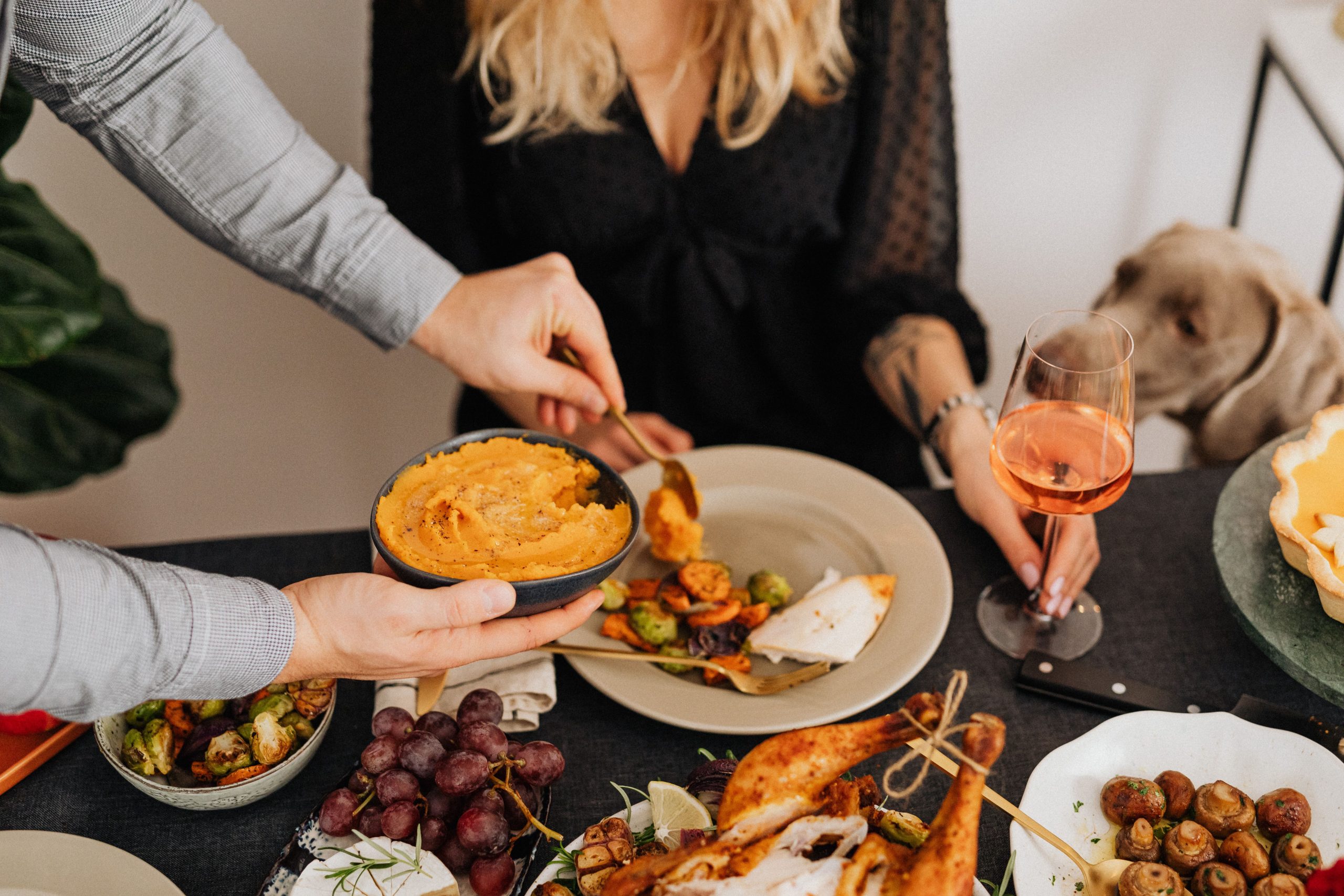
The holidays bring more food on the counter, more guests at the door and more new things on the floor than any other time of year. That’s why late November through early January is one of the busiest stretches for veterinary emergency rooms. Most of those visits can be prevented with a little planning. Here’s what to watch for in a home with dogs and cats.
Holiday foods that cause problems
The biggest risk is usually not one exotic ingredient. It’s the sheer amount of rich food within reach. Keep these off the counter and out of the trash:
- Chocolate and cocoa, especially dark and baking chocolate. See what to do if your dog ate chocolate.
- Anything sweetened with xylitol (also listed as birch sugar): sugar-free gum, candy, some peanut butters and baked goods. In dogs it can cause a dangerous drop in blood sugar and liver injury.
- Grapes, raisins and currants, including in stuffing, fruitcake and cookies.
- Onions, garlic, leeks and chives, which show up in gravy, stuffing and leftovers. Cats are even more sensitive than dogs.
- Turkey skin, fat trimmings and buttery side dishes. A single large, fatty meal can trigger pancreatitis, which is painful and sometimes serious.
- Cooked bones, which splinter and can lodge in the throat, stomach or intestines.
- Raw yeast dough and alcohol, including unattended cocktails and eggnog.
Ask guests not to share plates with your pet, and take the trash out after the meal. A string-tied roast or a drumstick bone pulled from the bin is a classic holiday emergency. For a fuller list, read foods that are toxic to dogs and cats.
Decorations
- Tinsel, ribbon and string. Cats find these irresistible. Once swallowed, a long strand can bunch up the intestines and needs surgery. If you see string hanging from your cat’s mouth or rear end, don’t pull it. Call your vet.
- Ornaments. Glass breaks into sharp pieces, and salt-dough ornaments are high in salt. Hang fragile and edible ornaments high on the tree.
- Tree water. It can carry fertilizer, preservatives and bacteria. Cover the stand.
- Electrical cords. Puppies and kittens chew. Use cord covers and unplug lights when you’re out.
- Candles and liquid potpourri. Tails knock candles over, and simmering potpourri can burn a cat’s mouth and skin.
- The tree itself. Anchor it to a wall or ceiling hook if you have a climber.
Holiday plants
Lilies are the one to take most seriously. True lilies and daylilies can cause kidney failure in cats, and even pollen licked off fur or water from the vase is enough. They show up in many holiday bouquets, so check arrangements before they come in the house.
Poinsettias have a scary reputation, but they usually cause only mild mouth irritation and stomach upset. Holly and mistletoe are more concerning and can cause vomiting, diarrhea and, with mistletoe, heart effects. Amaryllis bulbs are toxic too. For a longer list, see plants that are toxic to cats and dogs.
Guests, noise and routine
A full house is stressful for many pets, and open doors are how pets get lost. A few habits help:
- Give your pet a quiet room with water, a bed and a litter box, away from the party.
- Make sure ID tags are on and that your pet’s microchip registration has your current phone number.
- Tell guests not to let pets out, and keep coats, purses and luggage up high. Visitors’ bags often hold medications and sugar-free gum.
- Keep walk and meal times as close to normal as you can.
- If fireworks or loud gatherings frighten your dog, plan ahead with your vet. There are good options for noise anxiety, and they work best when started before the event.
When to call the vet
Call right away if your pet ate something on these lists, even if they seem fine. Many toxins take hours to cause signs, and treatment works best early. Also call for repeated vomiting, a swollen or painful belly, unproductive retching, weakness, tremors or anything hanging from the mouth or rear end. If you can’t reach your vet, the ASPCA Animal Poison Control Center is available 24/7 at (888) 426-4435 (a consultation fee may apply).